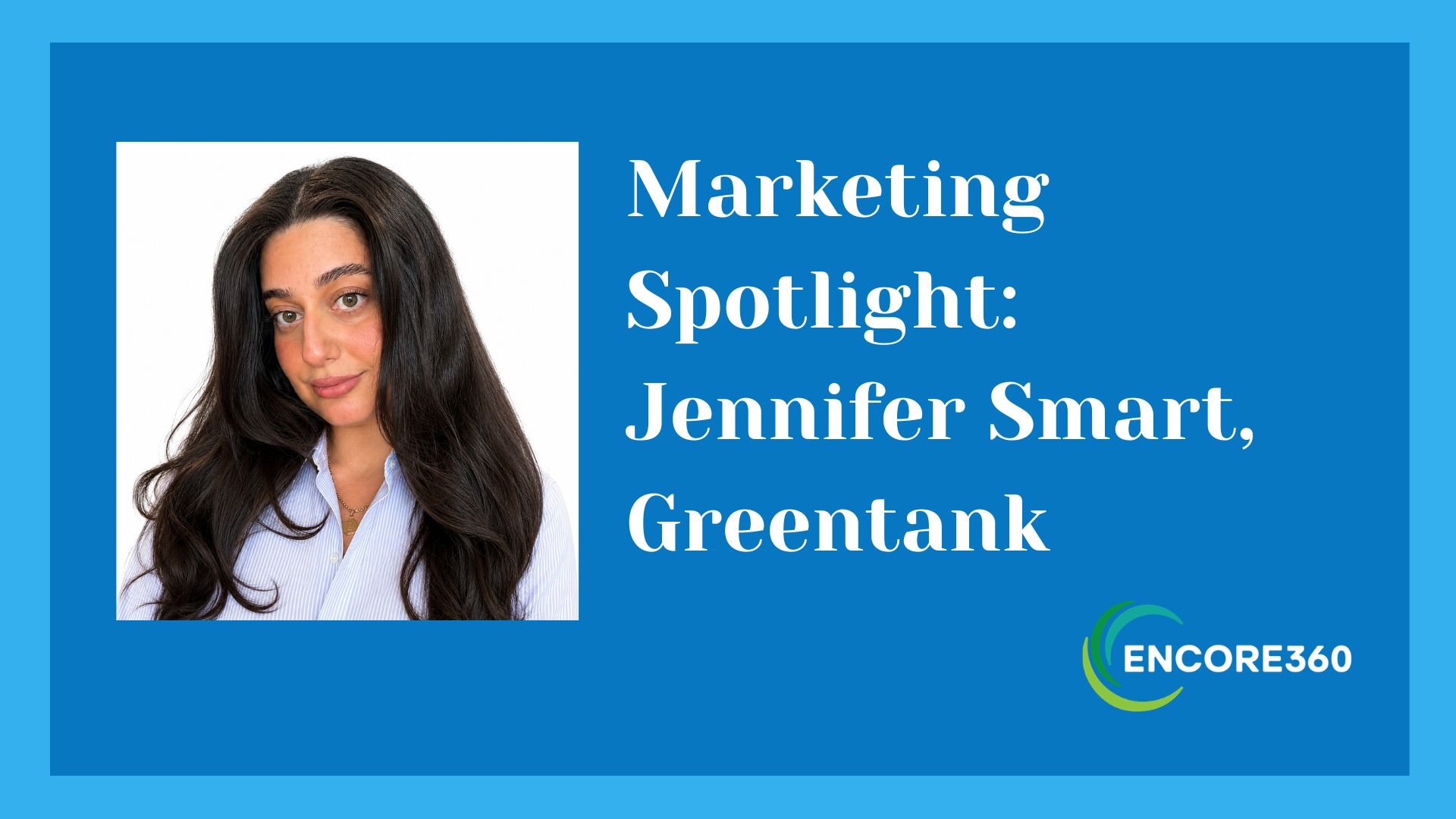
In heavily regulated industries, most of the marketing playbook is off limits. That’s exactly the challenge Jennifer Smart faced when she took the marketing manager role at Greentank, a cannabis hardware company headquartered in Toronto, Ontario—where advertising restrictions rule out many of the channels marketers typically rely on.
Now five years into the role, Smart has learned to make the most of what she can use. She leaned into thought leadership and brand credibility rather than direct product promotion, turning a constraint into a competitive advantage.
In this conversation with Encore360, Smart shares her path into cannabis marketing and how she competes in a volatile industry without the full marketing toolkit.
Encore360: What led you to marketing in the cannabis space specifically?
Jennifer Smart: I actually started in PR—that’s where my advanced diploma is from. I did an internship that was more marketing focused and I quickly realized I liked that more. What really confirmed it for me was when I ended up doing a PR internship and realized that career path wasn’t for me.
I’ve always been a creative person, so I really enjoy being able to combine creativity with strategy. Figuring out what motivates people, what motivates buyers, understanding different audiences, and finding the best way to communicate a product or an idea.
I was actually headhunted for this role, but at the time I was looking for an opportunity in the marketing space. My previous role was heavily focused on tradeshows, and only a little bit on the marketing side. Greentank actually reached out to me, and this was a completely new space for me.
Since I wasn’t familiar with Greentank, I spent some time learning about the company. That’s when I realized it wasn’t a cannabis company in the traditional sense—it was a B2B technology company developing innovative hardware for the cannabis industry. I found that really interesting.
I’ve always been fascinated by technology. Whether it’s PC gaming, console gaming, or the latest products from Apple, I’m always interested in seeing what’s new and how technology continues to evolve. That made Greentank feel like a natural fit. Even though at that point my background had been primarily in the B2B fashion and beauty industry, I thought why not take a chance and see? And I’m happy I did.
You’ve held a marketing/PR position at several different companies in different industries. How do you tailor your approach to meet each company’s goals?
When I was with a B2B fashion accessories company, I was a tradeshow marketing coordinator. My main focus was building brand awareness specifically through tradeshows. We did a lot more shows than we do at Greentank—I think at one point we were doing 25 shows and it was just me managing all of that. Building that brand awareness was the main priority, and also showcasing the products in a very visual, trend-driven way.
At Greentank, while tradeshows are still a big part of my role, I’ve transitioned more on the strategy side of things. We’re marketing highly technical products in a heavily regulated industry. There’s a much stronger emphasis on education, thought leadership, and helping customers understand the value behind our technology.
But in both roles I started by understanding who our audience was and what the business was trying to achieve. From there, adapting the messaging, the content, and the marketing channels to support those goals. I also balance creativity with data, continuously measuring what’s working, making adjustments where needed, and refining our approach over time.
So even though they’re very different industries, I think the core principle always remains the same. Understanding your audience, aligning the marketing strategy with the company’s objectives, and creating campaigns that generally add value.
And that doesn’t mean always focusing the content on product placement or new launches. You’ve got to mix it up. Especially in a B2B industry, I think one of the most important things you can do is educate your audience and share valuable industry expertise.
Now, you’ve been with Greentank for about five years. Can you speak to how the company’s marketing strategy has changed throughout your time there?
When I first joined Greentank in August 2021, we were largely focused on building brand awareness. My primary responsibility was managing our tradeshows. Over the past five years, both the company and our marketing strategy have matured significantly.
Today, our approach is more focused on building long-term credibility and partnerships while positioning Greentank as a leader in cannabis hardware technology. Because of the restrictions around advertising, we’ve leaned heavily into educational content, PR, email marketing, client appreciation events, and tradeshows.
We’ve also become a lot more collaborative across departments, working very closely with sales and getting their insights. They’re boots on the ground, always knowing what’s going on and what changes they’re seeing in the industry. We tweak our marketing strategy based on the feedback that they share with us.
Our product teams also play an important role in ensuring our messaging aligns with what’s coming through our product pipeline. Overall, we’ve become more strategic, more data-driven, and more focused on creating long-term value rather than simply promoting products.
The cannabis industry has had its fair share of ups and downs. How have you navigated those challenges as a marketer?
Being adaptable, for sure. The cannabis industry changes very quickly, whether it’s evolving regulations, market shifts, or changes in customer demand. The marketing behind it has to evolve just as quickly.
Although traditional advertising channels aren’t available to us, we’ve had to be creative in how we connect with our audience. We focus heavily on educational content, technical expertise, industry events, and building strong relationships with our customers.
We also invest in paid advertising where it makes sense. That’s something that works really well for lead generation—advertising through trusted cannabis industry publications that allow us to reach our target audience in a compliant way.
These challenges have ultimately made us more resourceful as marketers and reinforce the importance of staying close to both customers and the industry as a whole.
What excites you most about your role at Greentank and the work you do with the company?
No two days are exactly the same. I have the opportunity to work across so many different areas of marketing, whether it’s planning tradeshows, creating content, supporting product launches, managing email campaigns, or collaborating with our sales team and stakeholders.
I really enjoy that variety because it keeps me challenged, constantly learning, and keeps things interesting. I also love working with such a great and innovative team—the culture here is the best. Greentank is always pushing the boundaries of technology and innovation, and it’s really rewarding to help communicate that story.
Where do you see the future of cannabis marketing in five years from now?
I think cannabis marketing will continue to become more sophisticated as the industry matures. Education and authenticity are going to become even more important, and the brands that build trust through transparency will be the ones that stand out.
I also think AI will become a powerful tool for cannabis marketers, especially as brands look for smarter ways to personalize customer experiences while navigating a highly regulated industry. As AI becomes integrated into virtually every marketing platform, it will help teams work more efficiently, and spend more time focusing on strategy and creativity instead of repetitive tasks.
As regulations continue to evolve, hopefully there will be more opportunities to leverage digital marketing channels while still remaining compliant. Maybe in the future we’ll be able to do digital ads, which would be really exciting.
Regardless of how the marketing landscape changes, I think the companies that succeed will be the ones that focus on innovation, delivering value to customers, and building long-term relationships.
Editor’s note: This interview was edited for length and clarity.